AI Chief of Staff
Built for a 25-person agency managing 120+ enterprise deals across two CRMs, Gmail, Google Calendar, meeting transcripts, and Slack.
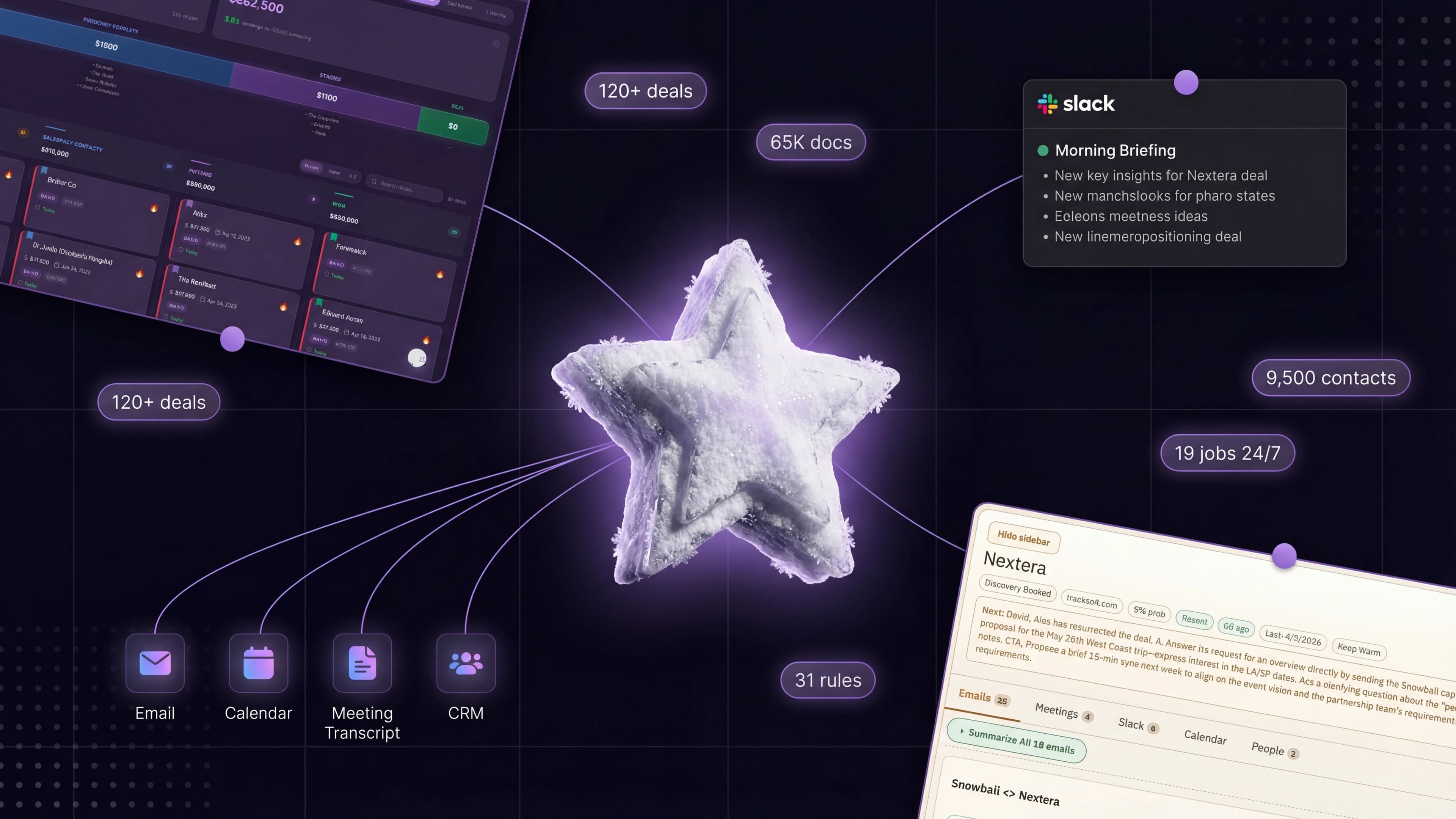
The CEO was spending hours every day switching between five platforms trying to figure out which deals needed attention. Pipeline data lived in two CRMs that contradicted each other. Email threads had context that never made it back to the CRM. Meeting notes sat in Google Docs nobody re-read. Slack conversations disappeared into channels. A lead would come in at 2am and sit untouched until someone happened to notice it the next afternoon. A $40K deal would have a great meeting and then nobody would schedule the follow-up. Two contacts at the same company would go cold at the same time and nobody would connect the dots. The information existed. It just lived in too many places for any one person to hold it all.
The Intelligence Layer
Nineteen background jobs pull continuously from both CRMs, Gmail, Google Calendar, meeting transcripts, and Slack. The system indexes 65,000 documents, 9,500 contacts, and 5,600 companies into a single Postgres database with 40 tables, 50 functions, and 35 triggers. An AI agent evaluates every active deal against 31 rules covering the full sales lifecycle. It reads actual email threads and meeting notes to generate specific next actions with context, not generic reminders. When the CRM says a deal is active but the last three emails were pricing objections, the agent reclassifies it to at-risk and changes the playbook. A deterministic safety net runs after every AI evaluation to catch anything the model got wrong before it reaches anyone.
Morning Briefings
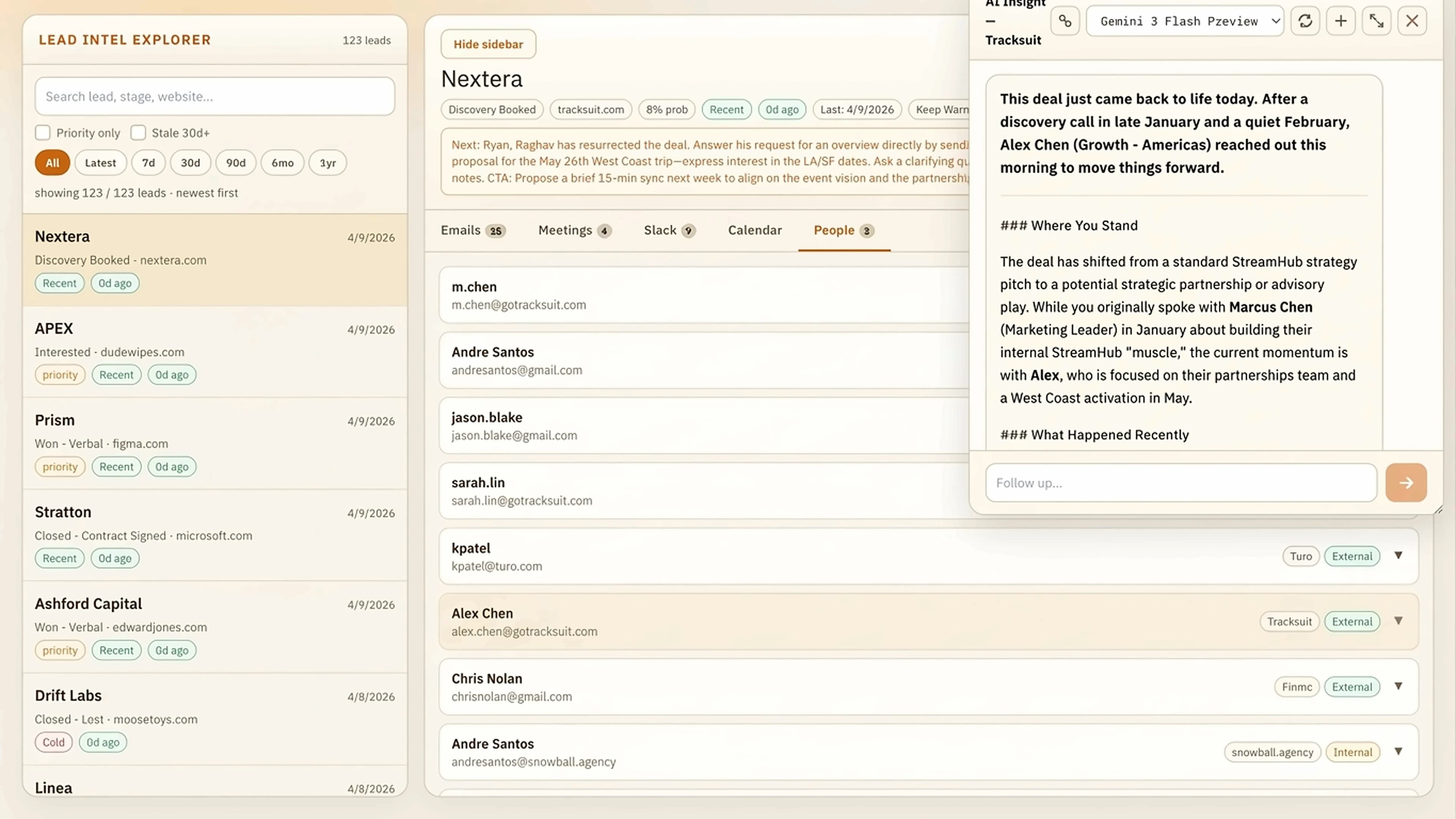
Every morning at 7am, one Slack message captures the entire pipeline. Today's meetings with context pulled from recent emails. Priority actions ranked by urgency. New deals that came in overnight with auto-extracted contact and company info. CRM corrections the system made automatically. One paragraph AI summary of where the pipeline stands. Weekends shift to a snapshot with a Monday look-ahead. Real-time alerts fire throughout the day only when they actually matter: a lead approaching the 4-hour SLA window, a deal that just changed stages, two contacts at the same company going silent simultaneously. Emoji reactions on any alert trigger real database operations. Checkmark marks it done. Snooze pauses follow-ups. Fix pushes a correction back to the CRM.
Two Interfaces, Two Jobs
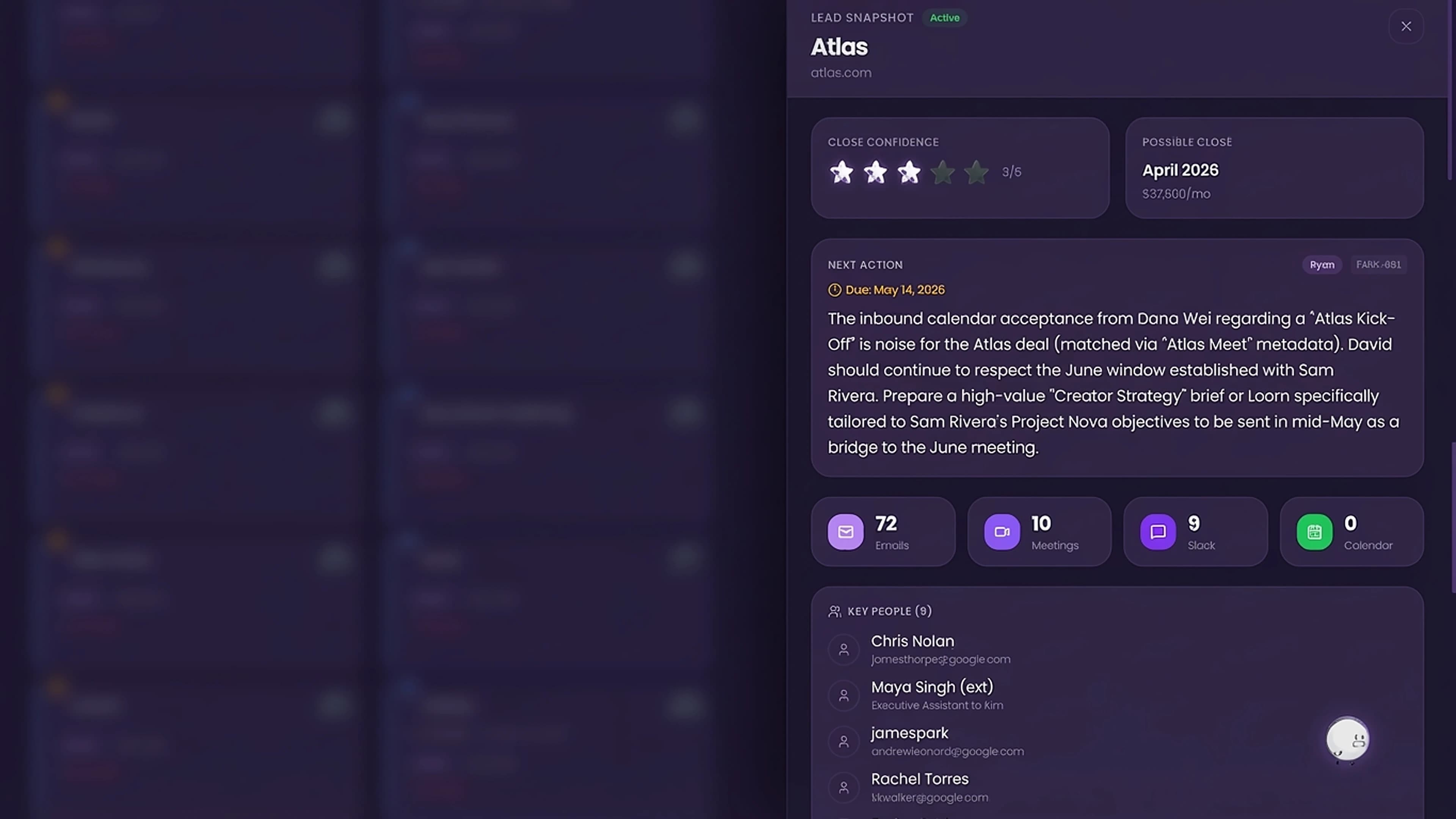
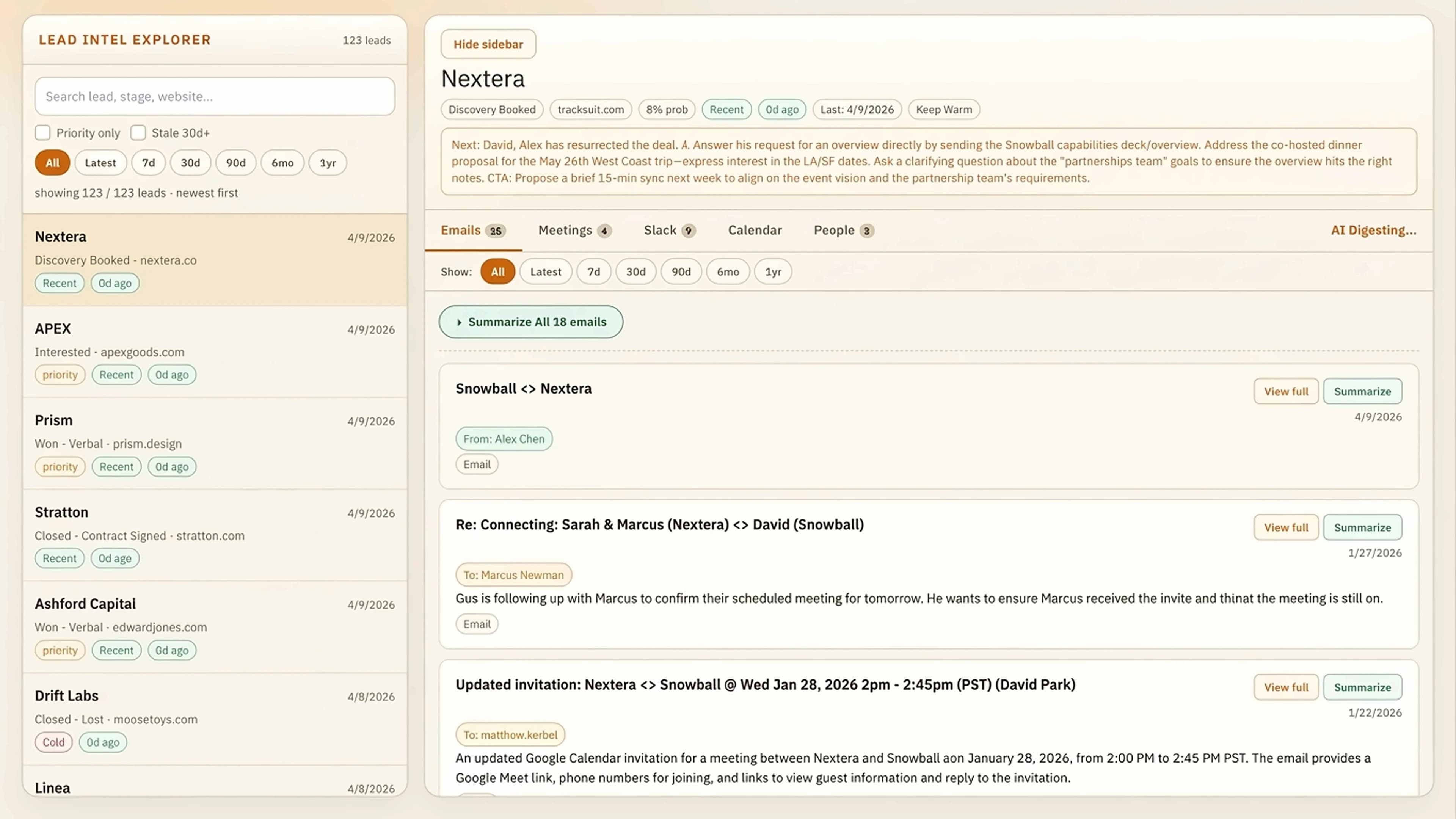
The team dashboard runs dark. Sales reps see their pipeline, per-deal AI analysis with "Where You Stand" and "What Recently Happened" summaries, every contact and email linked to each deal, and countdown timers on anything overdue. Revenue pacing against targets. Three dormant deal reactivation picks surfaced daily. The CEO command center runs light. Lead Intel Explorer searches across all 120 deals by entity, stage, or keyword. Deal snapshots show close confidence ratings, potential close dates, and the single most important next action with an owner and deadline assigned. Same database, two different lenses for two different jobs.
The CEO went from hours of daily context-switching to one morning briefing. Deals that used to go cold for weeks get flagged within hours. The system runs on five Docker containers on a single VPS. It costs less to operate than a single intern and catches things a team of five would miss. Every deal and contact has a living summary that rebuilds weekly or after 20 trigger events. Gemini Flash handles bulk cleaning and summarization at near-zero cost. Claude handles the reasoning layer.
Have something like this?
Let's talk